

Warren Buffett, Greg Abel, and the Next Chapter of Berkshire Hathaway: A Blueprint for Enduring Capitalism
As 2026 begins, Warren Buffett's formal handover of operational control of Berkshire Hathaway to Greg Abel marks not only a generational transition at one of the world's most closely watched conglomerates, but also a defining moment for global capitalism. For readers of business-fact.com, especially those following our Business, Economy, Founders, Investment, and Stock Markets coverage, Berkshire's evolution offers a living laboratory in long-term value creation, corporate governance, and the preservation of institutional culture across generations. The implications reach well beyond Omaha, influencing how investors, boards, policymakers, and entrepreneurs in New York, London, Frankfurt, Singapore, and Sydney think about capital allocation, risk, and responsibility in an era of rapid technological and geopolitical change.
From Failing Textile Mill to Trillion-Dollar Platform
When Buffett first began accumulating shares of Berkshire Hathaway in the early 1960s, the company was a struggling New England textile manufacturer under competitive and structural pressure. Rather than attempt to revive a structurally challenged industry, he redirected the firm's modest cash flows into insurance operations, realising that insurance "float"-the premiums held between collection and claims payment-could serve as a powerful and relatively low-cost source of investment capital. Over subsequent decades, that float became the engine behind strategic stakes in companies such as Coca-Cola, American Express, and later Apple, as well as the acquisition of entire businesses that generated predictable cash flows and durable competitive advantages.
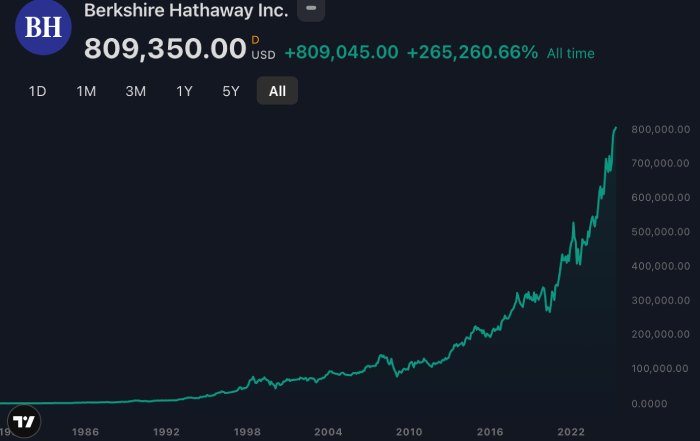
Regulatory filings accessible through the U.S. Securities and Exchange Commission show the extraordinary scale of this transformation: from a small-cap textile concern into a diversified conglomerate whose equity value exceeded one trillion dollars by the mid-2020s. Berkshire's Class A shares, which traded at roughly $19 in 1965, approached $700,000 by late 2025, reflecting a compound gain that few institutional investors have matched over such a long horizon. For business-fact.com, which has consistently highlighted the power of compounding and disciplined capital allocation in its Business and Economy analysis, Berkshire stands as a benchmark for what patient, rational investing can achieve even amid cycles of exuberance, crisis, and technological disruption.
Building a Global Operating Ecosystem
The closure of Berkshire's textile operations in 1985 freed capital for a series of acquisitions that gradually reshaped the firm into a global operating ecosystem. Today, wholly owned subsidiaries such as GEICO, BNSF Railway, Berkshire Hathaway Energy, and a wide constellation of manufacturing, retail, and service businesses generate substantial, recurring earnings across multiple geographies and economic cycles. These operating units complement a concentrated portfolio of listed securities, including long-standing positions in Moody's and Bank of America, which function as anchors in financial services and credit infrastructure.
The scale of this ecosystem is reflected in employment statistics compiled by bodies such as the U.S. Bureau of Labor Statistics, which underscore Berkshire's role as a major employer across North America and beyond. With hundreds of thousands of employees on five continents, the group influences local labour markets, infrastructure investment, and regional development in the United States, Europe, and Asia alike. For readers of business-fact.com's Employment and Global sections, Berkshire provides a compelling example of how diversified industrial and service holdings can reinforce national and regional economic resilience while still delivering attractive returns to shareholders.
A Distinctive Culture: Decentralisation with Deep Accountability
Perhaps Berkshire's most enduring competitive advantage lies not in any single asset but in its organisational architecture. Operating with an unusually lean headquarters staff in Omaha, the company delegates wide operational autonomy to subsidiary CEOs, who are expected to act as true business owners rather than divisional managers. This decentralised model, which minimises bureaucratic layers and centralised approval processes, has been frequently examined by management scholars and commentators at outlets such as Harvard Business Review, who note that it allows entrepreneurial energy to flourish within a large corporate framework.
For business-fact.com, which covers organisational design and digital transformation in its Innovation and Technology verticals, Berkshire's governance structure offers a counterpoint to the highly centralised, data-driven decision-making models prevalent in many technology and financial firms. The Berkshire model demonstrates that it is possible to maintain strong internal controls and capital discipline while granting local leaders the latitude to respond quickly to customers, regulators, and market shifts. This balance between autonomy and accountability is particularly instructive for mid-market CEOs and founders in Europe, Asia, and North America seeking to scale without suffocating the entrepreneurial culture that initially drove their growth.
Ethical Capital Allocation and the Power of Reputation
From the outset, Buffett framed Berkshire's mission as a partnership with shareholders, emphasising candid communication, conservative leverage, and a near-obsessive focus on reputation. His widely read annual letters, archived and studied by investors and academics worldwide, have consistently placed integrity above short-term earnings optimisation. Episodes such as Berkshire's intervention at Salomon Brothers in the early 1990s, crisis-era investments in Goldman Sachs and General Electric during 2008-2009, and his early warnings about the systemic risks of complex derivatives-famously described as "financial weapons of mass destruction"-have been extensively analysed by governance experts at institutions like the Harvard Law School Forum on Corporate Governance.
These case studies reinforce a central theme that business-fact.com has explored across its Economy and Banking coverage: that transparent communication and conservative risk management can reduce a firm's cost of capital, improve its access to high-quality deal flow, and strengthen its resilience in periods of market stress. In an age where reputational damage can propagate globally within hours via digital media, Berkshire's track record underscores that ethical capital allocation is not merely a moral stance but a strategic asset.
Philanthropy, ESG, and Capitalism's Expanding Stakeholder Lens
Beyond financial markets, Buffett has exerted substantial influence on global philanthropy and the broader debate around capitalism's social responsibilities. Since 2006, he has pledged and delivered the majority of his Berkshire holdings to charitable causes, with substantial grants directed to the Bill & Melinda Gates Foundation and other major institutions. His co-founding of the Giving Pledge, which encourages ultra-high-net-worth individuals to commit at least half of their wealth to philanthropy, has reshaped elite giving norms from North America and Europe to Asia and Africa.
This philanthropic leadership intersects with the rise of environmental, social, and governance (ESG) investing, as documented in reports from organisations such as the UN Principles for Responsible Investment. While Berkshire has sometimes been critiqued for a slower formal embrace of ESG frameworks compared with certain European asset managers, its substantial investments in renewable energy, grid modernisation, and community-focused utility projects-primarily through Berkshire Hathaway Energy-illustrate how long-horizon capital can advance decarbonisation and infrastructure resilience. Readers can explore broader context on these trends through resources such as the UN Environment Programme and business-fact.com's own Sustainable and Economy sections, where the interplay between profitability, regulation, and social impact is a recurring theme.
The Greg Abel Era: Continuity, Infrastructure, and Energy Transition
Effective 1 January 2026, Greg Abel assumes the role of Berkshire's CEO, while Buffett transitions to a chair emeritus capacity. Abel's professional trajectory, shaped largely within the energy and utilities domain, is central to understanding Berkshire's likely strategic direction in the coming decade. As the long-time leader of Berkshire Hathaway Energy, he has overseen multi-decade investments in regulated utilities, pipelines, and renewable assets, navigating a complex landscape of public utility commissions, environmental regulations, and evolving consumer expectations.
Industry analysts at organisations such as S&P Global and the International Energy Agency have noted that the energy transition-particularly in the United States, Europe, and parts of Asia-Pacific-will require trillions of dollars in capital to modernise grids, expand transmission, and integrate intermittent renewable generation. Abel's comfort with large-scale, capital-intensive, and heavily regulated projects positions Berkshire to remain a pivotal player in this transformation. For readers of business-fact.com's Technology and Investment pages, this suggests that Berkshire may increasingly function as both a financial and strategic investor in energy infrastructure, data centres, and logistics networks that underpin digital and green economies from California to South Korea.
Equally important is Berkshire's substantial cash balance, which in late 2025 exceeded $340 billion. This war chest provides Abel with flexibility to pursue share repurchases when Berkshire's stock trades below intrinsic value, to execute "elephant-sized" acquisitions, or to deploy capital opportunistically during market dislocations. How he chooses to balance these options will be closely monitored by institutional investors and covered in detail within business-fact.com's Business and Stock Markets reporting.
Berkshire as a Global Market Barometer
Because Berkshire's portfolio spans insurance, transportation, energy, consumer goods, technology, and financial services, its capital allocation decisions are often interpreted as signals about broader economic conditions. Asset managers from Toronto and London to Singapore and Tokyo track Berkshire's quarterly filings, available via the SEC EDGAR system, to infer management's views on equity valuations, credit conditions, and sectoral prospects. Changes in Berkshire's weighting towards banks, industrials, or technology, for example, can influence sentiment across indices such as the S&P 500, FTSE 100, and major European benchmarks.
Financial media outlets including CNBC and the Financial Times have highlighted that even incremental policy shifts-such as the introduction of a modest dividend, an expanded buyback authorisation, or a significant pivot in international exposure-could ripple through institutional asset allocation models worldwide. For business-fact.com's global readership, spanning North America, Europe, and Asia-Pacific, Berkshire thus functions not only as a potential portfolio holding but as a macro indicator, particularly relevant for those following our Global and News updates.
Long-Termism, Crisis Investing, and the Discipline of Patience
One of the defining features of Buffett's approach has been an unwavering commitment to long-termism. He has repeatedly emphasised that the ideal holding period for a high-quality business is "forever," provided its competitive advantages remain intact and its management continues to allocate capital intelligently. Historical case studies, such as Berkshire's investments in American Express during the salad oil scandal of the 1960s, GEICO in the 1970s, and the full acquisition of BNSF Railway in the aftermath of the global financial crisis, illustrate his willingness to deploy large amounts of capital when market sentiment is pessimistic and valuations are depressed.
Data from sources such as the Federal Reserve and the Bank for International Settlements support the notion that investors who maintain liquidity and act decisively during crises tend to achieve superior long-term returns. For business-fact.com's audience of executives, founders, and investment professionals, these lessons resonate strongly with themes regularly explored in our Investment and Economy commentary: namely, that disciplined patience, combined with the courage to be contrarian when fundamentals justify it, can outperform both short-term trading strategies and passive drift.
International Expansion and Learning Across Borders
While Buffett historically expressed a preference for U.S. equities, Berkshire's portfolio has become more international over the past two decades. The 2008 purchase of a significant stake in Chinese electric vehicle and battery manufacturer BYD signalled early recognition of the structural shift towards electrified transport and energy storage, themes now central to industrial policy in China, the European Union, and the United States. Later investments in Japan's major trading houses-Itochu, Marubeni, Mitsubishi, Mitsui, and Sumitomo-reflected an appreciation for diversified, cash-generative conglomerates embedded in global commodity and logistics networks.
These moves underscore a broader lesson for multinational executives and cross-border investors: durable economic moats can be identified in a wide range of institutional and cultural contexts, provided one invests the time to understand local governance norms, regulatory frameworks, and competitive dynamics. For readers of business-fact.com's Global and Economy coverage, Berkshire's selective international expansion reinforces the value of staying within a broad but evolving "circle of competence," while remaining open to learning from markets as diverse as Japan, China, and Brazil.
Transparency, Admitting Mistakes, and Governance Credibility
Not all of Berkshire's investments have been successful. The acquisition of Dexter Shoe, paid for in Berkshire stock that later soared in value, and the ultimately disappointing stake in IBM both represent costly misjudgments. Yet Buffett's willingness to discuss these errors openly in annual letters and shareholder meetings has enhanced rather than diminished his credibility. International organisations such as the OECD have highlighted such transparency as a hallmark of effective corporate governance, emphasising that candid acknowledgment of mistakes helps boards and investors better evaluate management quality and risk culture.
Business-fact.com has repeatedly underscored in its Business and Founders sections that this culture of openness is particularly relevant for high-growth technology and financial firms, where the pressure to maintain a narrative of unbroken success can tempt leaders to obscure setbacks. Berkshire's example suggests that admitting missteps, analysing their root causes, and adjusting frameworks accordingly can strengthen long-term trust with shareholders, regulators, and employees.
The Social Contract with Employees and Communities
Contrary to the stereotype of conglomerates as ruthless cost-cutters, Berkshire has generally pursued a more measured approach to workforce management. While not immune to restructuring, the group's subsidiaries are rarely pressured into short-term layoffs purely to meet quarterly earnings targets. This philosophy reflects Buffett's belief that durable competitive advantage is often rooted in human capital, institutional knowledge, and long-term customer relationships, which can be eroded by overly aggressive cost reductions.
Labour economists and social policy analysts, including those at the International Labour Organization, have argued that companies which balance shareholder returns with employment stability and skills investment contribute more sustainably to national productivity and social cohesion. For readers following business-fact.com's Employment and Sustainable coverage, Berkshire's approach offers a counter-narrative to purely financialised models of capitalism and aligns with emerging expectations from policymakers in the United States, the European Union, and parts of Asia-Pacific that large employers should play a constructive role in social and regional development.
Tax, Fairness, and the Evolution of Capitalism's Narrative
Buffett's public observation that his effective tax rate was lower than that of his secretary catalysed a global debate about the fairness and structure of tax systems in advanced economies. This remark, widely discussed in policy circles and mainstream media, contributed to proposals such as the "Buffett Rule" in the United States, which sought to ensure that high-income individuals pay at least a minimum effective tax rate. Institutions such as the OECD and the International Monetary Fund have since devoted extensive research to issues of tax equity, base erosion, and profit shifting, reflecting a broader shift in how societies evaluate the social contract between capital and labour.
Business-fact.com has tracked these developments closely in its Economy and Banking sections, emphasising that long-term business legitimacy increasingly depends on perceived fairness in tax contributions, environmental impact, and labour practices. Berkshire's own stance-combining large-scale philanthropy, support for more progressive personal taxation, and significant investment in public infrastructure-illustrates one possible model for reconciling wealth creation with evolving societal expectations.
Competing in a Data-Driven, AI-Enabled Economy
The global economy that Greg Abel inherits in 2026 differs profoundly from the environment in which Buffett began investing. Artificial intelligence, cloud computing, and advanced analytics now permeate industries from insurance and logistics to banking and consumer goods. Berkshire's subsidiaries, including GEICO and BNSF Railway, increasingly rely on machine learning for activities such as risk assessment, dynamic pricing, network optimisation, and predictive maintenance. Frameworks and guidance from organisations like the World Economic Forum and the OECD AI Policy Observatory highlight both the opportunities and ethical challenges associated with these technologies.
For business-fact.com, whose Artificial Intelligence and Technology pages examine AI's impact on productivity, employment, and regulation, Berkshire offers a case study in how a traditionally conservative capital allocator can still embrace digital transformation. The strategic question for Abel and his team will be how to integrate advanced data capabilities and automation without eroding the trust-based, decentralised culture that has long differentiated Berkshire from more centralised conglomerates and private equity platforms.
Succession as a Process, Not an Event
Concerns about "key-man risk" have surrounded Berkshire for decades, given Buffett's iconic status and central role in capital allocation. However, the company's board and leadership have spent many years quietly institutionalising decision-making processes and grooming successors. The elevation of Greg Abel and Ajit Jain to vice-chair roles in 2018 signalled a deliberate and transparent approach to succession, reducing uncertainty for investors and regulators. Comparative analyses in outlets such as the Wall Street Journal have shown that companies with well-articulated, phased succession plans tend to experience less valuation volatility and stronger stakeholder confidence during leadership transitions.
Business-fact.com has long argued in its Founders and Business coverage that succession planning is a core element of corporate governance, particularly for founder-led or personality-driven enterprises in technology, finance, and consumer sectors. Berkshire's transition illustrates how boards can balance respect for a legendary leader with the need to empower a new generation, codify decision frameworks, and ensure that culture and strategy are not overly dependent on any single individual.
Capital Discipline, Buybacks, and Shareholder Alignment
Since revising its share repurchase policy in 2018, Berkshire has used buybacks as a flexible tool for capital deployment when its stock trades below conservative estimates of intrinsic value. Rather than committing to fixed repurchase schedules, Buffett and now Abel have treated buybacks as one option among several, alongside acquisitions, organic reinvestment, and the maintenance of large cash reserves for opportunistic moves during downturns. Research by firms such as Morningstar indicates that such value-sensitive repurchase programs can enhance per-share intrinsic value over time, particularly when combined with disciplined avoidance of overleveraging.
For institutional and retail investors who follow business-fact.com's Investment and Stock Markets content, Berkshire's approach provides a nuanced framework for evaluating corporate buybacks. It suggests that the key question is not whether a company repurchases shares, but under what conditions, at what valuations, and with what impact on long-term strategic flexibility.
Strategic Lessons for Global Executives and Founders
The Berkshire Hathaway story, as documented and analysed across business-fact.com's Business, Economy, Founders, and Innovation sections, offers a set of enduring principles for leaders operating in diverse sectors and geographies. First, the insistence on investing only in businesses with clear economic moats underscores the importance of differentiation in increasingly competitive global markets, whether in fintech in London, e-commerce in Berlin, manufacturing in Shenzhen, or logistics in São Paulo. Second, the maintenance of conservative balance sheets and substantial liquidity highlights the strategic advantage of being able to act decisively when competitors are constrained by leverage or market panic. Third, the combination of decentralised autonomy with rigorous capital allocation demonstrates that scale need not come at the expense of entrepreneurial agility.
In 2026, as executives grapple with challenges ranging from geopolitical fragmentation and supply chain realignment to AI-driven disruption and climate risk, these lessons retain powerful relevance. They suggest that while technologies, regulations, and consumer behaviours evolve, the foundations of sustainable business success-integrity, rationality, patience, and respect for stakeholders-remain constant.
The Blueprint Beyond the Builder
As Warren Buffett steps back from day-to-day leadership, he leaves behind not only an extraordinary record of financial performance but also a coherent philosophy of business that has influenced investors, executives, policymakers, and academics on every continent. Greg Abel's task is not to imitate every tactical decision of his predecessor, but to preserve the underlying principles-rational capital allocation, decentralised empowerment, conservative risk management, and ethical conduct-while adapting Berkshire's strategies to a world shaped by AI, energy transition, demographic shifts, and geopolitical realignment.
For the global audience of business-fact.com, from institutional asset managers in New York and London to entrepreneurs in Bangalore, Berlin, and Bangkok, the Berkshire transition will remain a focal point of analysis in the years ahead. It will test whether a carefully constructed institutional blueprint can outlive its architect and continue to generate value across generations, markets, and technological paradigms. In documenting this next chapter through our Business, Economy, Technology, and Global reporting, business-fact.com will continue to examine how visionary leadership, combined with robust governance and ethical stewardship, can shape not only shareholder returns but the evolving narrative of capitalism itself.