

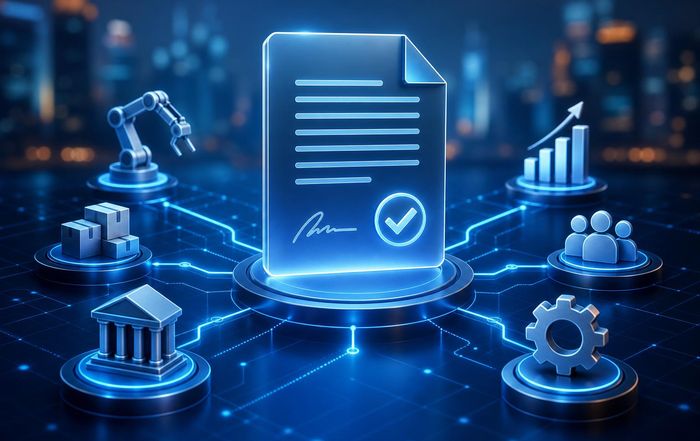
How Smart Contracts Are Changing Business Operations?
Smart contracts, once a niche concept confined to early blockchain enthusiasts, have become a central pillar of digital transformation strategies for enterprises across North America, Europe, and Asia by 2026. As organizations from New York to Singapore and from Frankfurt to Sydney seek to automate complex business relationships, reduce operational friction, and manage risk in increasingly interconnected markets, the programmable, self-executing nature of smart contracts is reshaping how agreements are designed, executed, and enforced. For the business minded individuals here today which focuses on business, stock markets, employment, founders, the global economy, banking, investment, technology, artificial intelligence, innovation, marketing, and sustainable growth, understanding this shift is no longer optional; it is fundamental to strategy and competitiveness.
From Legal Text to Executable Code: What Smart Contracts Really Are
A smart contract is typically defined as an agreement whose terms are directly written into code and deployed on a distributed ledger, usually a blockchain, where it automatically executes when predefined conditions are met. Unlike traditional contracts that rely on manual interpretation and enforcement, smart contracts operate as deterministic programs running on networks such as Ethereum, Solana, or enterprise-grade blockchains built on frameworks like Hyperledger Fabric and Corda, and they are increasingly integrated with off-chain data sources through so-called oracles.
To appreciate the magnitude of this transition, it is useful to compare it with the evolution of digital payments. Just as electronic payment systems transformed how money is transferred without changing the underlying concept of value exchange, smart contracts transform how obligations and rights are operationalized without changing the core idea of a contract. Resources such as the Bank for International Settlements explore how programmable money and tokenized assets interact with contractual logic, while the International Swaps and Derivatives Association has been examining how derivative contracts can be expressed in machine-readable form, illustrating that leading financial institutions now treat smart contracts as a serious infrastructure layer rather than an experiment.
For businesses following the broader evolution of digital technology and automation, smart contracts represent the convergence of law, code, and finance, enabling agreements that are both legally meaningful and operationally executable at machine speed.
Operational Efficiency: Automating the Business Back Office
The most immediate and quantifiable impact of smart contracts is in operational efficiency. Across banking, supply chains, insurance, and corporate finance, organizations are using programmable agreements to eliminate manual reconciliation, reduce paperwork, and cut the time between triggering events and settlement.
In trade finance, for example, smart contracts can replace complex letter-of-credit workflows that traditionally involve multiple banks, freight forwarders, insurers, and customs authorities. By encoding shipment milestones, document verification rules, and payment triggers into a shared blockchain environment, banks and corporates reduce disputes and accelerate working capital cycles. The World Trade Organization has highlighted how distributed ledgers and smart contracts can streamline cross-border trade processes, and organizations like the World Economic Forum have documented pilot projects linking customs, logistics providers, and financial institutions through shared, programmable workflows.
For readers of Business-Fact.com's banking coverage, this trend is particularly relevant, as leading institutions such as JPMorgan Chase, HSBC, and BNP Paribas experiment with tokenized deposits and on-chain collateral management, where smart contracts automatically enforce margin requirements and settlement sequences. These systems not only reduce back-office costs but also enable real-time risk management, a capability that regulators such as the U.S. Securities and Exchange Commission and the European Securities and Markets Authority are watching closely as they consider the future of market infrastructure.
Transforming Stock Markets and Capital Markets Infrastructure
By 2026, smart contracts sit at the heart of several tokenized securities platforms and experimental market infrastructures in the United States, Europe, and Asia. The concept of "smart securities" or "programmable assets" is reshaping how ownership, voting rights, and corporate actions are managed, with direct implications for investors following stock market developments.
Tokenized equity and bonds issued on permissioned or public blockchains can embed corporate actions directly into their smart contract logic. Dividend payments, coupon distributions, and even certain voting mechanisms can be executed automatically based on on-chain records of ownership at specific block heights or timestamps. The London Stock Exchange Group, Deutsche Börse, and Singapore Exchange have all explored or launched tokenization initiatives, while the International Organization of Securities Commissions has been assessing how these innovations align with existing regulatory principles.
In the United States, the Federal Reserve and other central banks have been examining the interplay between central bank digital currencies, tokenized bank deposits, and smart contracts, exploring scenarios where settlement in wholesale markets becomes near-instantaneous and atomic, greatly reducing counterparty and settlement risk. This has direct consequences for the design of clearing and settlement systems, with many observers seeing smart contracts as a potential foundation for T+0 or even continuous settlement environments.
For institutional investors and corporate treasurers who follow investment trends, the ability to structure complex products-such as structured notes, revenue-sharing agreements, or tokenized funds-through auditable, transparent smart contracts is creating new opportunities for customization and risk management, while also demanding a higher level of technical literacy from finance professionals.
Employment, Skills, and the Changing Nature of Contract Work
The rise of smart contracts is not only a technology story; it is a labor and employment story as well. As organizations automate contract execution and integrate programmable logic into workflows, the skills required in legal, compliance, finance, and operations are evolving rapidly, with implications for readers interested in employment dynamics.
Routine tasks in contract administration, such as tracking milestones, sending payment reminders, and verifying document delivery, are increasingly handled by code. This automation reduces the need for certain clerical roles but simultaneously creates demand for professionals who can bridge law, business, and software engineering. Legal engineers, blockchain architects, and compliance technologists are becoming indispensable, particularly in major financial centers such as New York, London, Frankfurt, Singapore, and Hong Kong.
Organizations such as the International Labour Organization and the OECD have highlighted how digitalization and automation are reshaping job profiles, and smart contracts are a clear example of this shift. For freelance and gig workers, smart contracts can, in theory, enable more transparent and timely payment, with milestones and deliverables encoded into the agreement and funds held in escrow on-chain until conditions are met. Platforms experimenting with decentralized work marketplaces use smart contracts to match tasks with contributors globally, enforce reputation systems, and handle cross-border payments in tokenized form.
Yet this transformation also raises questions about worker protections, dispute resolution, and jurisdiction. While code can automate payment, it cannot by itself resolve every nuance of performance quality or unforeseen circumstances. Regulators, courts, and arbitration bodies are therefore exploring how traditional legal frameworks apply to these new forms of agreement. The United Nations Commission on International Trade Law has been studying the legal recognition of electronic and automated contracting, providing a reference point for governments updating commercial laws to accommodate smart contracts.
Founders, Startups, and the New Architecture of Digital Organizations
For founders and innovators, smart contracts provide a powerful toolkit for designing digital-native business models that operate across borders from day one. The rise of decentralized autonomous organizations (DAOs) and tokenized platforms, while volatile and sometimes controversial, has demonstrated that governance rules, revenue-sharing mechanisms, and incentive structures can be implemented directly in code, creating organizations that are partly or fully governed by smart contracts rather than traditional corporate bureaucracy.
Entrepreneurs building in the United States, Europe, and Asia are using smart contracts to manage subscription revenues, loyalty programs, and marketplace fee distributions with unprecedented granularity. A software-as-a-service startup, for instance, can deploy smart contracts that automatically allocate a percentage of every subscription payment to affiliates, developers, or content creators based on a transparent revenue-sharing formula visible on-chain. This kind of programmable incentive design aligns well with the interest of Business-Fact.com readers who follow founder stories and innovation, as it illustrates how governance and economics are being reimagined.
Organizations such as Y Combinator, Techstars, and Station F have observed a steady stream of blockchain-native startups experimenting with token-based business models, while regulators like the U.S. Commodity Futures Trading Commission and the Monetary Authority of Singapore have issued guidance on token offerings and digital asset service providers. For founders, navigating this environment requires not just technical expertise but also a deep understanding of securities law, data protection, and cross-border compliance, underscoring the importance of multi-disciplinary teams and advisory networks.
Smart Contracts and the Global Economy: Toward Programmable Commerce
At a macro level, smart contracts are contributing to the emergence of programmable commerce, where value flows, risk transfers, and compliance checks are embedded into digital infrastructure. This evolution is particularly visible in cross-border trade, remittances, and supply chain finance, where frictions have historically been high and transparency limited.
The World Bank and the International Monetary Fund have analyzed how distributed ledgers and programmable agreements can support financial inclusion and reduce remittance costs, especially in emerging markets across Africa, South America, and Southeast Asia. By enabling automated escrow, conditional payments, and compliance checks, smart contracts can lower barriers for small and medium-sized enterprises in countries such as Brazil, South Africa, Thailand, and Malaysia to participate in global trade networks, accessing working capital and insurance products that were previously out of reach.
For readers tracking the broader global economy, this shift suggests a gradual move from paper-based, jurisdiction-specific processes toward interoperable, code-defined standards. Initiatives like the Digital Economy Partnership Agreement between countries including Singapore, New Zealand, and Chile, and the European Union's work on digital identity and eIDAS frameworks, create a regulatory environment where smart-contract-based processes can be recognized across borders, provided they meet security and governance requirements.
Banking, DeFi, and the Convergence of Traditional and Crypto Finance
One of the most visible arenas where smart contracts are reshaping business operations is in the convergence between traditional banking and decentralized finance (DeFi). While the speculative excesses of early crypto markets have been tempered by regulatory scrutiny and market cycles, the underlying smart contract architectures that power decentralized exchanges, lending protocols, and automated market makers have demonstrated that core financial functions can be executed by code without centralized intermediaries.
Major banks and asset managers are now experimenting with "DeFi-inspired" infrastructure in permissioned environments, deploying smart contracts to manage collateral, automate interest calculations, and facilitate peer-to-peer lending among institutional participants. The Bank of England and the European Central Bank have published analyses of tokenization and DeFi, acknowledging the potential efficiency gains while emphasizing the importance of risk controls and regulatory oversight.
For the Business-Fact.com community following crypto and digital assets, this period marks a transition from purely public, retail-oriented DeFi platforms to hybrid models where regulated entities integrate smart contracts into their core systems. Custodians, exchanges, and payment providers are building infrastructure that can interact with both traditional ledgers and blockchains, allowing clients to move between fiat, tokenized deposits, and digital assets while maintaining compliance with anti-money-laundering and know-your-customer requirements.
Technology, Artificial Intelligence, and the Next Layer of Automation
Smart contracts do not operate in isolation; they are part of a broader ecosystem of technologies, including artificial intelligence, cloud computing, and Internet of Things (IoT) devices. The intersection of smart contracts and AI is particularly significant for readers of Business-Fact.com's artificial intelligence coverage, as it opens new avenues for autonomous decision-making in business operations.
AI systems can analyze market data, risk indicators, or operational metrics and feed their outputs into smart contracts that then trigger financial transactions, supply chain adjustments, or insurance payouts. For instance, a machine learning model that predicts shipment delays could update the parameters of a logistics contract, adjusting penalties or rerouting decisions automatically via on-chain logic. Research institutions and organizations like MIT Sloan School of Management and Stanford Graduate School of Business have explored how AI and blockchain together can support more resilient and adaptive business networks.
At the same time, oracles that connect smart contracts to real-world data introduce new trust and governance challenges. Projects inspired by Chainlink and other oracle networks aim to provide secure, decentralized data feeds, but enterprises must still assess data provenance, model risk, and accountability. This is where robust governance frameworks and standards from bodies such as the International Organization for Standardization and the National Institute of Standards and Technology become critical, ensuring that smart contract systems meet security, reliability, and interoperability expectations.
Innovation, Marketing, and Customer Experience in a Programmable World
Beyond back-office efficiency and financial infrastructure, smart contracts are enabling new forms of customer engagement and marketing innovation. Brands in sectors ranging from luxury goods to gaming and entertainment are using tokenized assets, loyalty points, and digital collectibles encoded in smart contracts to create richer, more interactive relationships with customers.
For example, a European fashion brand can issue tokenized loyalty passes that grant holders access to exclusive events, early product drops, or personalized services, with eligibility and benefits enforced automatically through smart contract logic. Similarly, streaming platforms and content creators can distribute royalties and revenue shares transparently to artists, producers, and collaborators based on on-chain consumption data. For readers interested in marketing and innovation, these developments illustrate how programmable incentives and verifiable digital ownership can differentiate customer experiences in crowded markets.
Organizations like the Interactive Advertising Bureau and WPP-affiliated research units have examined the potential of blockchain-based advertising and loyalty systems, while regulators and consumer protection agencies assess how to safeguard privacy and prevent misleading practices. As brands experiment with non-fungible tokens and token-gated experiences, the line between financial engineering and customer engagement becomes increasingly blurred, underscoring the need for clear ethical and regulatory frameworks.
Governance, Risk, and Trust: Building Reliable Smart Contract Systems
Despite their promise, smart contracts introduce new categories of operational and legal risk. Code is not infallible, and bugs in smart contracts have led to high-profile losses in decentralized finance and tokenized platforms over the past decade. For enterprises, the challenge is to harness the benefits of automation while implementing rigorous governance, testing, and risk management processes.
Leading organizations now subject critical smart contracts to formal verification, third-party audits, and continuous monitoring, drawing on best practices documented by security-focused firms and research groups. The Cybersecurity and Infrastructure Security Agency and similar bodies in Europe and Asia have emphasized the importance of secure software development lifecycles for critical digital infrastructure, and these principles apply directly to smart contract development.
From a legal perspective, questions remain about jurisdiction, liability, and dispute resolution. Courts in the United States, United Kingdom, Singapore, and other jurisdictions have begun to recognize the enforceability of digital signatures and electronic agreements, but the precise status of purely on-chain contracts can vary. Legal scholars, bar associations, and institutions such as the Harvard Law School Program on International Financial Systems are actively debating how to reconcile immutable code with doctrines such as contract frustration, mistake, and unconscionability.
For business leaders, the key is to integrate smart contracts into broader enterprise risk frameworks, ensuring that they align with internal controls, regulatory obligations, and ethical standards. This requires collaboration between technology teams, legal departments, compliance officers, and external partners, as well as continuous education to keep pace with evolving best practices.
Sustainability, ESG, and the Role of Smart Contracts in Responsible Business
Sustainability and environmental, social, and governance (ESG) considerations are increasingly central to corporate strategy, and smart contracts are beginning to play a role in how organizations track, verify, and report on their ESG commitments. For the Business-Fact.com audience following sustainable business trends, this intersection is particularly relevant.
Smart contracts can automate the issuance and retirement of carbon credits, renewable energy certificates, and other environmental assets, reducing the risk of double counting and improving transparency in voluntary and compliance markets. Initiatives documented by the United Nations Environment Programme and the World Resources Institute highlight how blockchain-based registries and programmable certificates can enhance integrity in climate-related reporting.
In supply chains, smart contracts linked to IoT sensors and certification bodies can record provenance data for raw materials, track labor standards compliance, and enforce sustainability-linked payment terms. For example, a buyer might agree to pay a premium automatically when certain verified environmental or social criteria are met, with the conditions encoded in a smart contract that references trusted data sources.
While these systems are still emerging, they illustrate how programmable agreements can support more accountable and data-driven ESG strategies, aligning financial incentives with sustainability goals and providing stakeholders with verifiable evidence of performance.
Huge Implications for Business Leaders
Ssart contracts have moved from experimental pilots to production use in multiple industries and regions, touching on many of the themes that we cover across business strategy, global markets, technology, and finance. For executives, investors, and founders, the strategic questions are no longer whether smart contracts matter, but how and where to deploy them responsibly and effectively.
Organizations that treat smart contracts merely as a cost-cutting tool risk missing their broader potential to enable new business models, cross-border collaboration, and data-driven governance. Conversely, those that rush into complex programmable systems without robust governance, legal clarity, and security practices expose themselves to operational, regulatory, and reputational risk.
The most successful adopters are likely to be those that combine deep domain expertise with technical excellence, building cross-functional teams that understand both the subtleties of contractual relationships and the realities of coding, testing, and maintaining mission-critical software. As business networks become more interconnected and markets more dynamic, the capacity to design, audit, and govern smart contracts will increasingly differentiate resilient, innovative enterprises from those that struggle to keep pace.
In this evolving landscape, continuous learning and engagement with trusted sources, from international institutions and regulators to specialized research centers and sites like this, will be essential. Smart contracts are not simply another IT project; they are a foundational shift in how business agreements are conceived, executed, and enforced, with implications that span stock markets, employment, entrepreneurship, global trade, finance, technology, and sustainability.