

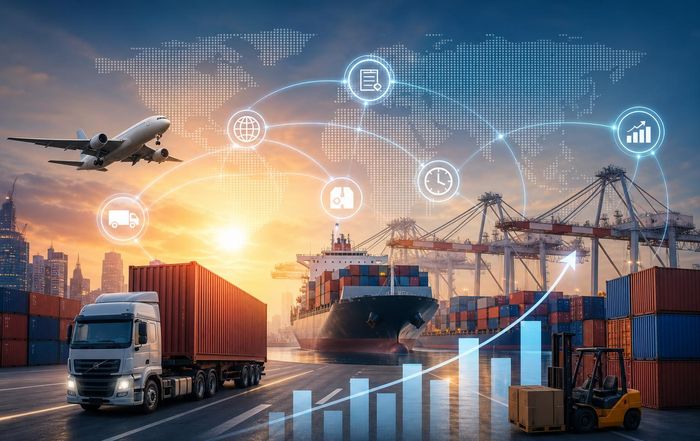
How Smart Logistics Improves Business Performance
Smart logistics has moved from a peripheral efficiency topic to a central strategic pillar for high-performing companies in 2026, reshaping how organizations design supply chains, allocate capital, manage risk, and compete in increasingly volatile global markets. For the readership of business-fact.com, which is deeply focused on business performance, stock markets, employment, founders, the global economy, banking, investment, technology and artificial intelligence, smart logistics is no longer just an operational concern but a decisive driver of enterprise value, market valuation, and long-term resilience.
From Cost Center to Strategic Asset
In the past, logistics was often treated as a necessary cost center, with executives concentrating on incremental savings in transportation and warehousing. Today, leading organizations treat logistics as a strategic asset that directly influences revenue growth, customer retention, and brand equity. Research from institutions such as the World Economic Forum shows that supply chain disruptions have had multi-trillion-dollar impacts on global GDP over the last decade, and smart logistics has emerged as a primary defense against such shocks. Learn more about the changing nature of global trade on the World Economic Forum.
For businesses navigating complex environments in the United States, Europe, Asia and beyond, logistics capabilities are increasingly integrated into broader corporate strategies. Successful business folks who follow developments in business strategy and operations will recognize that logistics now sits alongside product innovation, digital transformation and capital allocation as a core CEO priority. Analysts tracking listed companies on stock markets are paying closer attention to supply chain resilience, inventory turns, and last-mile efficiency as leading indicators of future earnings quality, not merely backward-looking cost metrics.
Defining Smart Logistics
Smart logistics in 2026 can be understood as the convergence of advanced digital technologies, data-driven decision-making, and integrated physical networks to orchestrate the end-to-end flow of goods with greater speed, transparency, and reliability. It relies on pervasive connectivity, cloud platforms, artificial intelligence, automation, and real-time analytics to replace fragmented, manual processes with coordinated, intelligent systems.
Core elements include sensor-enabled assets, such as vehicles and containers equipped with Internet of Things (IoT) devices, advanced planning and optimization tools that use AI and machine learning, robotics and autonomous systems in warehouses and yards, and integrated platforms that connect shippers, carriers, third-party logistics providers and customers in real time. To understand how artificial intelligence underpins these capabilities, readers can explore the dedicated new coverage of AI on business-fact.com's artificial intelligence section and complement it with technical insights from organizations such as MIT Sloan Management Review, accessible via its portal on digital transformation and AI.
Unlike earlier generations of logistics digitization that focused on automating individual tasks, smart logistics aims for end-to-end orchestration, ensuring that procurement, production, warehousing, transportation, customs clearance, and last-mile delivery are synchronized through shared data and predictive analytics. This systemic view is what allows logistics to become a lever for top-line growth, not just bottom-line savings.
The Economic Logic: How Smart Logistics Drives Performance
The economic case for smart logistics rests on three interlocking pillars: cost efficiency, revenue enhancement, and risk mitigation. Each of these has become more significant as global supply chains have grown more complex and as customer expectations for speed and reliability have intensified across markets from the United States and Canada to Germany, Singapore and Australia.
Cost efficiency remains the most visible benefit. By optimizing routes, consolidating loads, improving warehouse layout and labor allocation, and reducing empty miles, companies can achieve double-digit percentage reductions in transportation and handling costs. The OECD has documented how logistics performance correlates strongly with national productivity and trade competitiveness, which can be explored in detail on its trade and logistics pages. At the firm level, these savings directly enhance operating margins, freeing capital for investment in innovation, marketing and expansion.
Revenue enhancement is often less immediately obvious but equally powerful. Smart logistics enables faster delivery, more accurate order fulfillment, better inventory availability and more reliable lead times, all of which translate into higher customer satisfaction and loyalty. In e-commerce and omnichannel retail, where consumers in the United Kingdom, France, Spain and beyond increasingly expect same-day or next-day delivery, logistics capability can be the deciding factor between winning and losing market share. Companies that master last-mile delivery and returns processing can support more flexible business models, such as subscription services and on-demand fulfillment, which open new revenue streams and improve lifetime customer value.
Risk mitigation has come to the foreground following the supply chain disruptions of recent years, including geopolitical tensions, climate-related events, and public health crises. Smart logistics provides real-time visibility into inventory, shipments and capacity, allowing companies to respond quickly to disruptions, reroute flows, and rebalance stock. The McKinsey Global Institute has highlighted the value of building resilient supply chains that can absorb shocks and recover quickly, and interested readers can examine these perspectives on supply chain resilience. By reducing the frequency and severity of stockouts, production stoppages and delivery failures, smart logistics protects revenue, safeguards reputations and stabilizes cash flows.
Technology Foundations: Data, AI and Automation
Smart logistics is built on a foundation of data, analytics and automation. At its core, it requires high-quality, timely data about demand, inventory, capacity and movement, coupled with intelligent systems that can interpret that data and trigger appropriate actions. Companies around the world are investing heavily in digital platforms and cloud-based systems to integrate disparate data sources and provide a single source of truth across the supply chain.
Artificial intelligence and machine learning play a central role in forecasting demand, optimizing inventory, planning routes and schedules, and identifying anomalies or risks. For example, AI-driven demand forecasting can incorporate vast sets of external data, such as weather patterns, economic indicators and social media trends, to predict sales more accurately across regions like North America, Europe and Asia. This allows companies to position inventory more efficiently and reduce both stockouts and overstock. Those interested in the broader business implications of AI can refer to the artificial intelligence coverage on business-fact.com and to thought leadership from Harvard Business Review on AI-enabled decision-making.
Automation in warehouses, including robotics for picking, packing and sorting, has advanced rapidly, particularly in markets such as the United States, Germany, Japan and South Korea. Autonomous mobile robots, automated storage and retrieval systems, and computer vision technologies enable higher throughput with greater accuracy and fewer errors, which is critical in high-volume e-commerce operations. The International Federation of Robotics provides a useful overview of global trends in industrial and logistics robotics on its statistics and reports pages.
In transportation, telematics and IoT devices monitor vehicle performance, driver behavior, cargo conditions and route progress in real time. This data feeds into optimization engines that can dynamically adjust routes based on traffic, weather or capacity constraints. Autonomous and semi-autonomous vehicles are being piloted in controlled environments and specific corridors, particularly in North America and parts of Asia, further reshaping the cost and safety profile of logistics operations. Readers seeking a deeper understanding of the technology dimension can explore technology trends and analysis on business-fact.com.
Smart Logistics and Financial Performance
For investors, bankers and corporate finance professionals, the impact of smart logistics on financial performance is increasingly quantifiable. Companies that adopt advanced logistics capabilities often see improvements across key performance indicators such as inventory turnover, cash conversion cycles, return on invested capital and earnings volatility. The World Bank has long emphasized the importance of logistics performance for trade and development, as reflected in its logistics performance resources.
By reducing inventory levels through better forecasting and visibility, firms can free up working capital and reduce financing costs, which is particularly relevant in an environment of fluctuating interest rates in regions like the United States, the Eurozone and the United Kingdom. Improved delivery reliability and lead-time accuracy reduce the need for safety stock and emergency shipments, which further enhances margin stability. Investors following logistics-intensive sectors through stock market insights on business-fact.com increasingly look at these metrics as signals of operational excellence and management quality.
For banks and lenders, smarter logistics can reduce credit risk by improving the resilience and predictability of borrowers' cash flows, especially in trade-dependent sectors such as manufacturing, retail and agriculture. Trade finance products and supply chain finance structures can be enhanced by real-time shipment data, providing greater transparency into the movement of goods that underpin financial transactions. Those interested in the intersection of logistics and financial services can delve into banking topics on business-fact.com and review analyses from the Bank for International Settlements on trade finance and supply chain finance.
Employment, Skills and the Future Workforce
Smart logistics is also reshaping employment patterns and skill requirements across economies from Canada and the Netherlands to China, Brazil and South Africa. Automation reduces the need for some repetitive manual tasks, particularly in warehousing and sorting, but it also creates demand for new roles in systems management, data analysis, maintenance, and process design. The International Labour Organization has examined the implications of digitalization for work and skills, which can be explored in its future of work resources.
For workers, the transition requires reskilling and upskilling, as roles shift from purely physical tasks to hybrid roles that blend physical activity with digital tools and analytics. Companies that invest in workforce development, safety and career progression are better positioned to attract and retain talent in competitive labor markets, particularly in logistics hubs such as the United States, Germany, Singapore and the United Arab Emirates. Readers focused on labor markets and workplace transformation can reference employment analysis on business-fact.com for broader context.
At a macro level, smart logistics can support job creation in high-value segments of the economy, such as logistics technology, data science, and advanced manufacturing, even as it automates some lower-skill tasks. Policymakers in Europe, Asia and North America are increasingly focused on ensuring that training systems and educational institutions keep pace with these shifts, aligning curricula with industry needs and encouraging collaboration between businesses, universities and public agencies.
Founders, Startups and Innovation in Logistics
The rise of smart logistics has created significant opportunities for founders and startups across regions from the United States and United Kingdom to India, Singapore and Israel. Venture-backed companies are developing new platforms for freight matching, real-time visibility, warehouse automation, last-mile delivery and cross-border compliance. These innovators often partner with or compete against established players such as DHL, UPS, FedEx and Maersk, which are themselves investing heavily in digital transformation and innovation. The OECD and other bodies have documented how innovation ecosystems are reshaping traditional sectors, and readers can explore these trends through resources on innovation and entrepreneurship.
For founders, logistics offers a rich landscape of complex, real-world problems where data, algorithms and hardware can create tangible value. Successful startups are often those that deeply understand the operational realities of shippers and carriers, build interoperable solutions that integrate with existing systems, and focus on measurable performance improvements. Those interested in entrepreneurial stories and leadership insights can consult the founders section on business-fact.com, which frequently highlights how logistics innovations intersect with broader business models.
Corporate venture capital and strategic partnerships have become common in this space, as large incumbents seek to access new capabilities and talent while startups leverage established networks and customer bases. This interplay is accelerating the diffusion of smart logistics technologies across markets in Europe, Asia-Pacific, North America and Latin America.
Globalization, Regionalization and Supply Chain Strategy
Smart logistics is developing in parallel with shifts in globalization, including near-shoring, friend-shoring and regionalization strategies that companies are adopting in response to geopolitical tensions, trade disputes and evolving regulations. Multinational firms in sectors from automotive and electronics to pharmaceuticals and consumer goods are rethinking where they source, manufacture and distribute, with implications for logistics networks across Europe, Asia, Africa and the Americas.
Real-time data and advanced modeling tools allow companies to evaluate multiple network configurations, balancing cost, resilience, lead times and sustainability. The World Trade Organization provides detailed analysis of trade flows and policy developments on its trade and supply chain pages, which can help contextualize logistics decisions within broader global trends. For readers seeking a business-oriented view of these shifts, the global section and economy section of business-fact.com offer regular coverage of macroeconomic developments and their impact on supply chains.
In practice, many companies are building multi-node, regionally balanced networks that rely on smart logistics to coordinate production and distribution across multiple hubs. This approach can reduce exposure to single-point failures, shorten lead times to key markets, and align with regulatory and sustainability requirements in regions such as the European Union, which has introduced stricter rules on supply chain due diligence and environmental impact.
Sustainability, ESG and Smart Logistics
Sustainability and environmental, social and governance (ESG) considerations are now integral to logistics strategy, particularly for companies listed in major markets such as the United States, United Kingdom, Germany, France and Japan, where investors and regulators demand greater transparency on emissions and social impact. Smart logistics plays a crucial role in reducing greenhouse gas emissions, improving resource efficiency and supporting responsible labor practices.
Optimized routing, load consolidation and mode shifting from air to sea or rail can significantly cut emissions, while electrification of fleets and the adoption of alternative fuels further reduce environmental impact. The International Energy Agency offers data and analysis on transport emissions and decarbonization pathways on its transport sector pages. Companies are also using smart logistics systems to monitor and manage emissions across their supply chains, enabling more accurate reporting and target setting under frameworks such as the Science Based Targets initiative, accessible via its corporate climate guidance.
From a business perspective, sustainability in logistics is not only about regulatory compliance or reputation management; it is increasingly linked to cost savings (through fuel efficiency and waste reduction), risk management (by anticipating climate-related disruptions) and customer preference (as consumers and B2B buyers favor suppliers with credible ESG credentials). Readers interested in the intersection of sustainability and business performance can explore the sustainable business section on business-fact.com, which frequently highlights logistics as a key lever in corporate sustainability strategies.
Digital Platforms, Data Sharing and Ecosystem Collaboration
One of the defining features of smart logistics in 2026 is the rise of digital platforms and collaborative ecosystems that facilitate data sharing and coordinated action among multiple stakeholders. Historically, supply chains were characterized by information silos, with each participant managing its own data and systems. Today, cloud-based platforms and standardized interfaces enable shippers, carriers, freight forwarders, customs authorities and customers to share real-time information about orders, shipments and capacity.
This shift is fostering the emergence of logistics marketplaces, visibility platforms and control towers that span regions from North America and Europe to Asia-Pacific. Organizations such as GS1 promote global standards for identification and data exchange, which are essential for interoperability and can be explored on its standards and logistics pages. For companies, participating in these ecosystems can unlock new efficiencies and insights, but it also requires clear governance around data ownership, privacy and cybersecurity.
From a strategic standpoint, executives must decide whether to build proprietary logistics platforms, partner with existing providers, or adopt hybrid approaches. These decisions have implications for competitive differentiation, capital expenditure, and long-term flexibility. The innovation section on business-fact.com frequently examines how platform strategies shape competitive dynamics across industries, including logistics and transportation.
Crypto, Digital Assets and Supply Chain Finance
While still emerging, the integration of blockchain, crypto-assets and tokenization into logistics and supply chain finance is gaining traction, particularly in cross-border trade involving Asia, Europe and Africa. Distributed ledger technologies can support tamper-evident records of shipments, smart contracts for automated payments upon delivery milestones, and tokenized representations of goods in transit that can be used as collateral. Organizations such as IBM and Maersk have experimented with blockchain-based trade platforms, and broader industry initiatives continue to explore these possibilities.
For financial markets and investors, these developments intersect with the evolution of digital assets and decentralized finance. Readers interested in this convergence can consult crypto and digital asset coverage on business-fact.com and complement it with regulatory perspectives from the European Central Bank on digital currencies and financial innovation. While regulatory uncertainty remains in many jurisdictions, the potential for more transparent, efficient and secure trade finance processes is drawing attention from banks, fintechs and corporates alike.
Marketing, Customer Experience and the Logistics Brand
In many sectors, logistics performance has become a central element of the customer value proposition and brand narrative. Fast, reliable and transparent delivery is now a key differentiator in e-commerce, B2B distribution and direct-to-consumer models across markets such as the United States, United Kingdom, Germany, Australia and Japan. Marketing teams increasingly collaborate with logistics and operations to design service promises, communicate delivery options, and manage expectations.
Smart logistics enables more precise delivery windows, real-time tracking, proactive notifications and flexible options such as pick-up points, lockers and rescheduling. These capabilities enhance customer trust and satisfaction, which are critical drivers of repeat purchases and positive word-of-mouth. The Chartered Institute of Marketing has highlighted how operational excellence, including logistics, contributes to brand equity, as discussed on its thought leadership pages. For a broader view of how logistics intersects with go-to-market strategies, readers can explore marketing insights on business-fact.com.
In B2B contexts, particularly in sectors such as industrial equipment, pharmaceuticals and high-tech, smart logistics allows suppliers to offer value-added services such as vendor-managed inventory, consignment stock, and guaranteed uptime, all of which strengthen customer relationships and create barriers to entry for competitors.
What about Future Safety Concerns for Business Leaders
For executives, founders and investors who rely on this site for strategic insight, the implications of smart logistics are clear: it is no longer sufficient to treat logistics as a back-office function or outsource it without strategic oversight. Leadership teams must integrate logistics considerations into corporate strategy, capital planning, risk management and digital transformation initiatives.
This involves assessing the current maturity of logistics capabilities, benchmarking against industry leaders, and identifying priority areas for investment, whether in data infrastructure, automation, workforce skills or ecosystem partnerships. It also requires safety and risk governance structures that ensure cross-functional coordination among operations, human control, finance, technology, sustainability and commercial teams. Regular monitoring of logistics performance metrics, monitoring of systems capability, measurement and evaluation, linked to financial and customer outcomes and other factors is essential for continuous improvement.
Smart people can follow ongoing developments in smart logistics, supply chain strategy and related technologies through the news section and the main business-fact.com portal, which aggregate global perspectives across business, stock markets, employment, founders, economy, banking, investment, technology, artificial intelligence, innovation, marketing, global trends, sustainable practices and crypto. As time progresses, the organizations that treat smart logistics as a core strategic capability-grounded in experience, expertise, skill-will be best positioned to enhance business performance, navigate uncertainty and create durable competitive advantage in an increasingly interconnected world.